Adjustment of Status: How to Get Your Green Card Without Leaving the U.S. (2026 Guide)
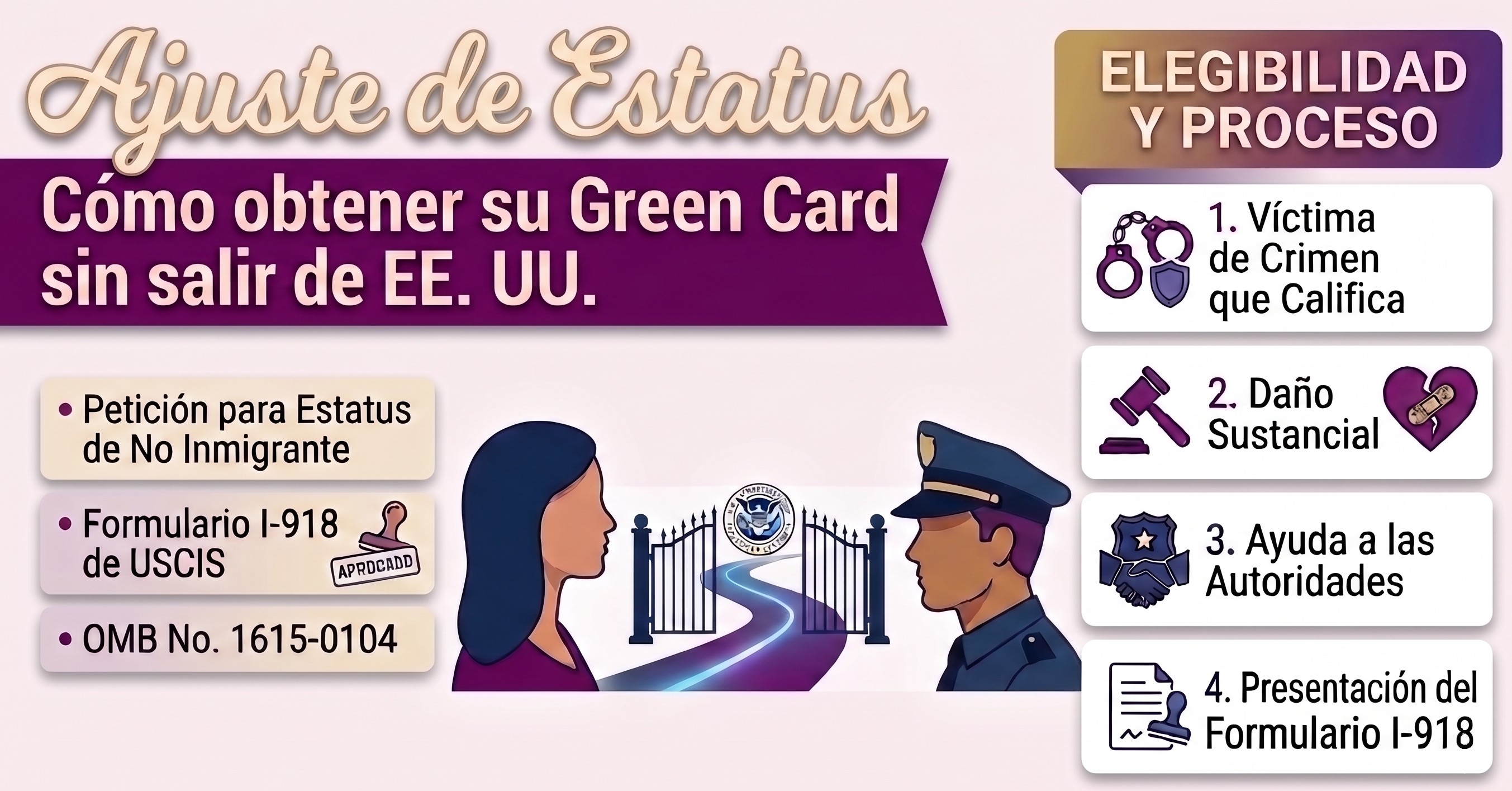
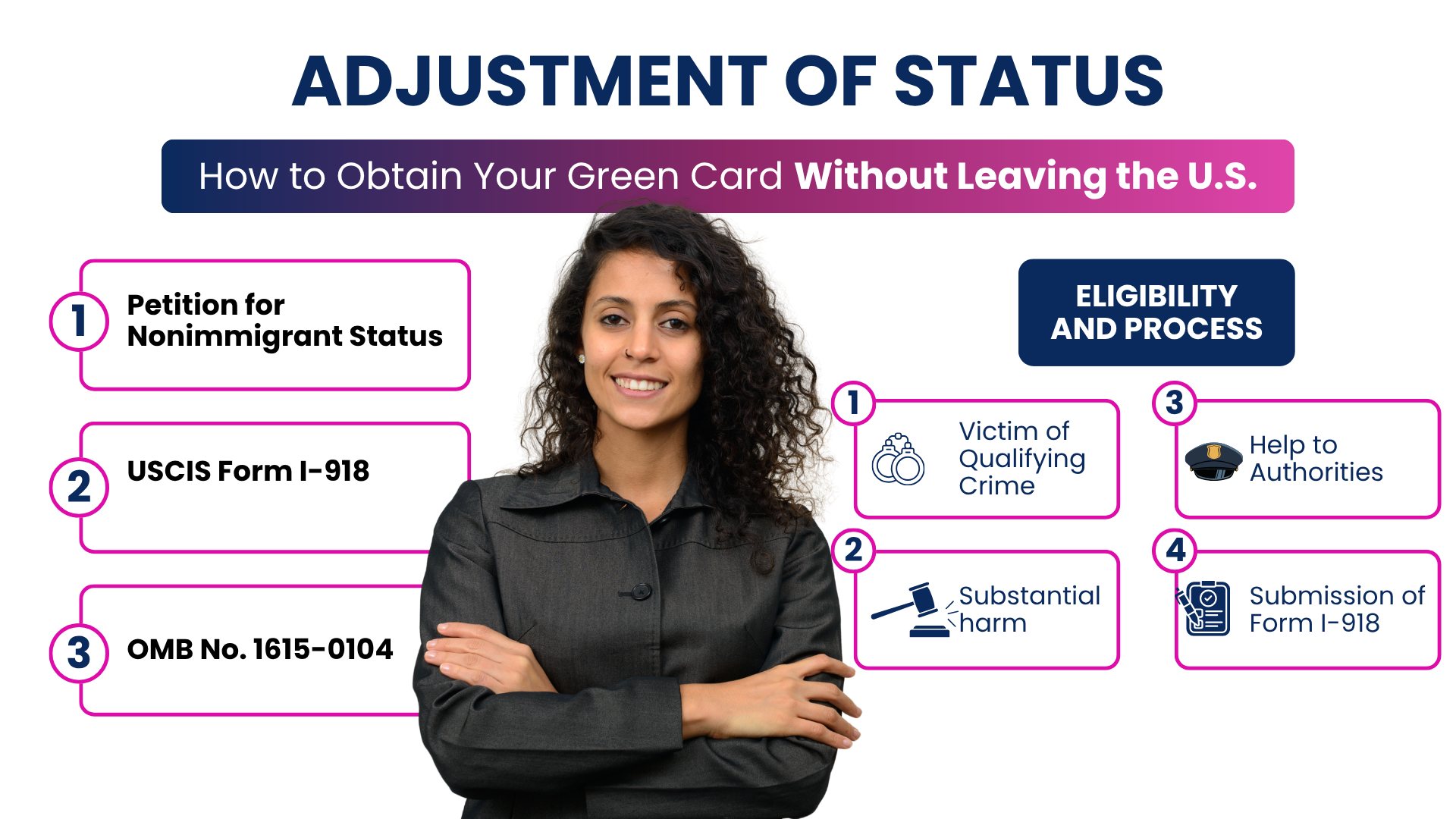
Want to become a permanent resident without leaving the country? The process of status adjustment (form i-485) allows you to request your green card while you are still in the United States.
Adjustment of Status: How to Get Your Green Card Without Leaving the U.S. (2026 Guide)
You have already made the United States your home. The last thing you want is to travel thousands of miles to another U.S. Embassy, and wait to be allowed back in.
The good news? You don´t have to.
Adjustment of Status (Form I-485) is the usual way for a person already in the United States to obtain lawful permanent residency. However, considering the USCIS backlog surpassing 5 million cases in 2026, ensuring everything is correct on your first attempt is crucial now more than ever.
Can I get my papers without leaving the country?
This is one of the first questions we hear at Elizabeth Rosario Law. Many families feel a lot of anxiety when they think about having to leave the United States and wait for months or even years in their birth country for an interview.
There is a way to stay in the United States while you apply for your green card. This is called Adjustment of Status. It is an immigration process that lets you change your immigration status without going to an embassy in another country. Instead of consular processing (which happens outside the U.S.), you stay here with your family.
The Three Golden Requirements to apply from Home
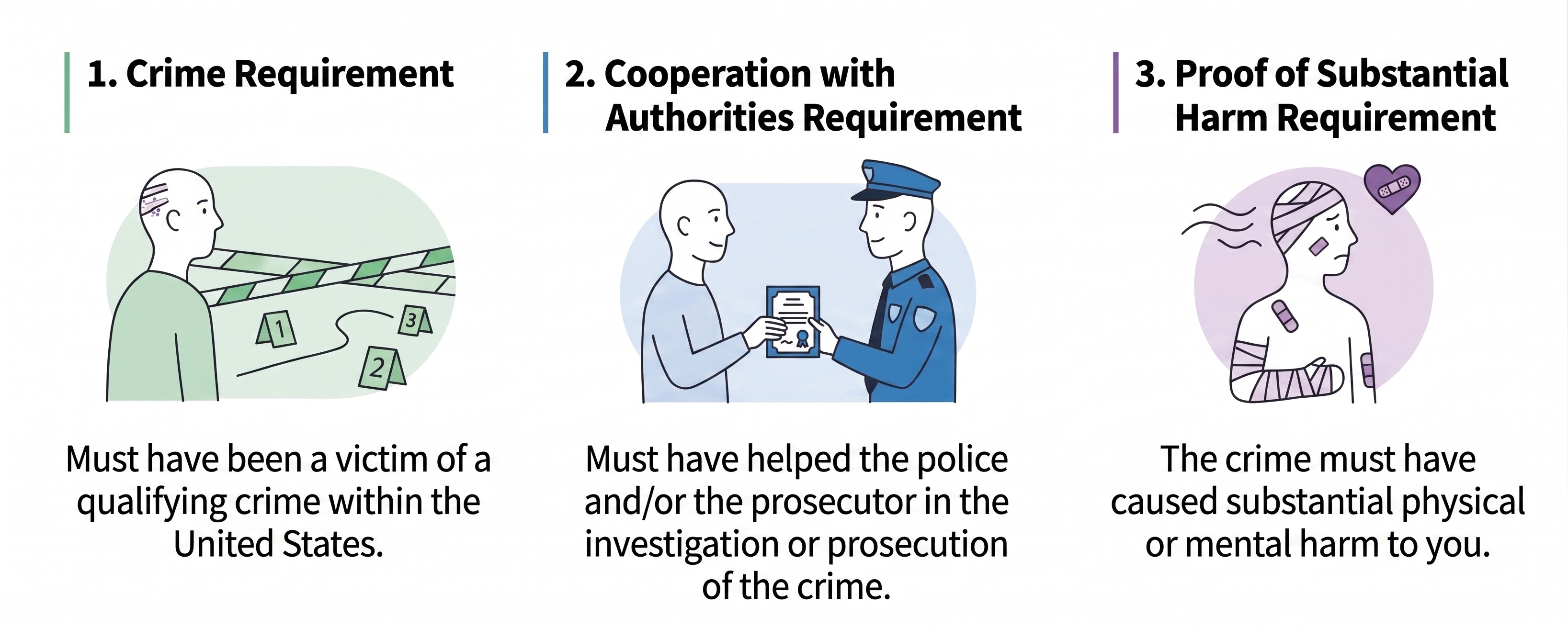
While every immigration case is unique, you generally qualify to file Form I-485 if you meet these three core requirements:
You are in the U.S. now: You must be physically present in the United States at the time you file your application and when the Citizenship and Immigration Services (USCIS) makes a final decision.
A family member sponsors you: In most cases, a family member (like a U.S. citizen spouse, parent, or adult child) or an employer must sponsor you. However, as we will discuss below, some brave individuals are eligible to petition for themselves.
You entered the right way: Generally, you must have entered the U.S. through a legal port of entry and were “inspected” by an USCIS officer (for example, entering with a tourist visa, a work visa, or parole).
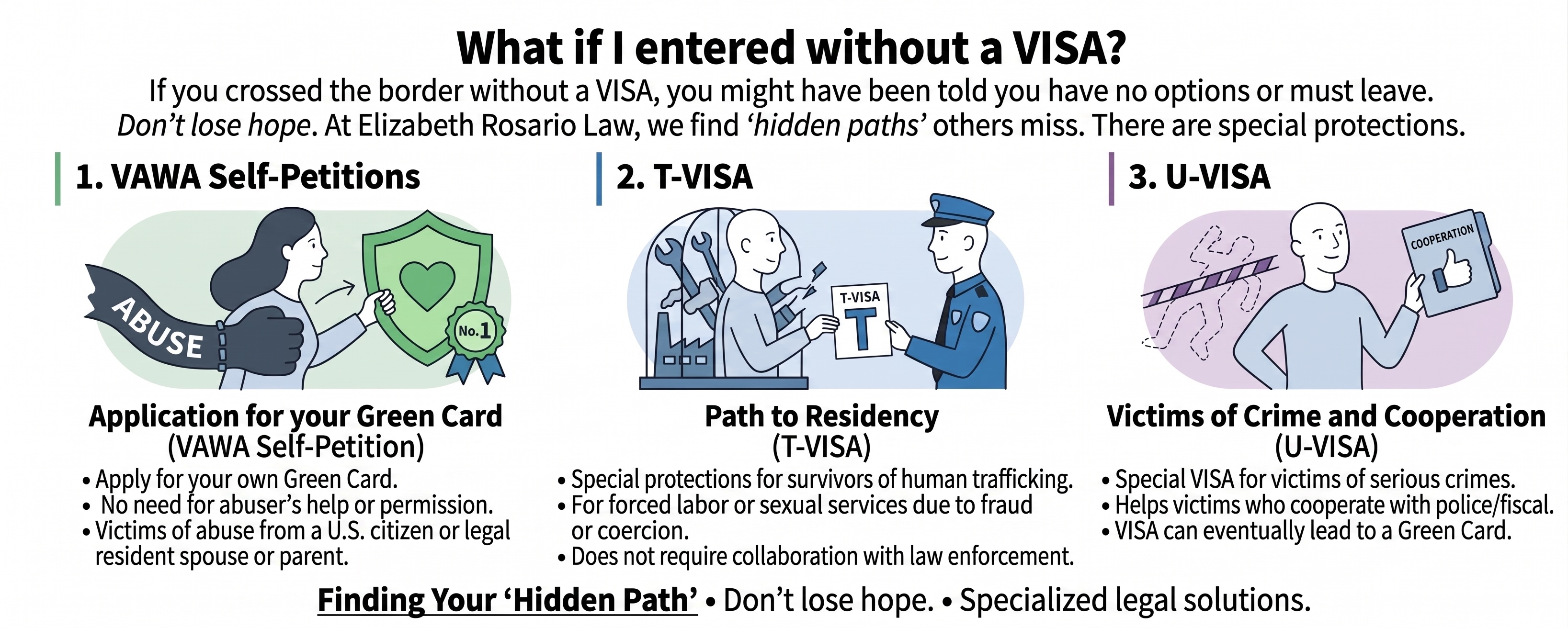
What if I entered without a VISA?
If you crossed the border without a visa, people may have told you that you have no choice but to leave. Don't lose hope. At Elizabeth Rosario Law, we find “hidden paths” that other immigration attorneys might not see.
You can fix your papers and stay in the U.S. through special protections like these:
VAWA Self-Petitions: If you have suffered abuse at the hands of a U.S. citizen or permanent resident spouse or parent, you can apply for your own Green Card. You do not need the abuser’s help or permission. To learn more about finding safety and status, visit our [detailed guide on VAWA Self-Petitions].
T- VISA: If you were forced to work or perform services against your will through fraud or coercion, the T- VISA provides a powerful path to residency. Read more about how we help survivors in our [T- VISA blog].
U- VISA: For victims of certain crimes who have helped law enforcement, this VISA can eventually lead to a Green Card [U- VISA blog].
1. How USCIS Works with You?
Two main government bodies handle your legal journey. First, USCIS looks at your form I-485 and takes your filing fee. Second, the Department of State looks at the visa bulletin. This is a list that uses your priority date to show when it is your turn to get a green card.
If your sponsor is a U.S. citizen spouse or child, your wait is much shorter. You won't have to wait for a priority date to “become current” because a spot is always open for you.
Our Goal: We want to help you avoid the stress of removal proceedings and keep your family together. If you aren't sure if you were “inspected and admitted” correctly, or if you are worried about the 90-day rule regarding your entry, our team is ready to review your immigration status and give you a plan-of-action answer.
How do I get my green card through marriage?
Being married to a citizen spouse is one of the fastest ways to get your immigration status, because you are a close family member, the law puts you at the front of the line. You don't have to wait for a priority date to open up before you can start.
The "One-Step" Advantage: Filing Together
In 2026, Elizabeth Rosario Law uses a “one-step” process called Concurrent Filing. Instead of sending one form and waiting months to send the next, we send your marriage petition (Form I-130) and your green card application (Form I-485) at the exact same time.
1. Why is this a game-changer for you?
It’s Faster: This can save you 6 to 8 months in the immigration process.
Work while you wait: You can apply for a work permit (EAD) at the same time. Most of our clients get their permits in 2 to 5 months. This lets you work and help your family financially while your immigration case is still being reviewed.
You are Safe: Once Citizenship and Immigration Services (USCIS) accepts your papers, you are in an “authorized stay”. This protects you from removal proceedings while you wait for your green card.
The Step-by-Step Path to Your Green Card
Every immigration case is different, at Elizabeth Rosario Law, we follow a tactical planning to make sure your case stays on track:
Proving your marriage is “Bona Fide”: We help you gather “bona fide” evidence proof, like joint bank accounts, photos, and letters from friends. This shows the USCIS officer that your marriage is based on love.
The Medical Exam (I-693): You will visit a USCIS-designated doctor to ensure you meet health requirements. We recommend doing this early to avoid a “Request for Evidence” (RFE) later.
Fingerprints (Biometrics Appointment): A few weeks after we file, you will go to a local immigration services USCIS office to have your photo and fingerprints taken.
The Interview: This is the last step. You and your spouse will meet with a USCIS officer to answer questions about your life together. (Don’t worry—you will practice with your (future) immigration lawyer for every possible question!).
Watch Out for the “90-Day” Trap
If you just arrived in the United States on a tourist visa, be careful. You should talk to your (future) immigration attorneys before you file. The government looks at the first 90 days after you arrive. They want to make sure you didn't plan to marry and stay before you even got here. ERL checks your timeline to make sure your filing follows all the rules on the USCIS website.
A Note on costs: The filing fee for this package is an investment in your family’s future. At Elizabeth Rosario Law, we offer a free evaluation case and payment plan to help make this step easier for you.
Can I get a green card if my spouse abused me?
For many people, the scariest part of the immigration process is feeling that your future belongs to someone else. If your citizen spouse or resident partner uses your immigration status to scare or control you, you might feel trapped.
We want you to know:
You do not have to stay in a hurtful relationship to get your Green Card.
What is a VAWA Self-Petition?
There is a powerful law called the Violence Against Women Act (VAWA). It lets victims of domestic violence or "extreme cruelty" apply for residency on their own. This means you send your own paperwork (Form I-360) and your own Form I-485 without needing the other person.
1. Three Important Facts for Your Safety:
It is 100% Private: Under federal law, Citizenship and Immigration Services (USCIS) is not allowed to tell the person who hurt you that you applied. They will never even know.
Use A Safe Address: You can give a "safe address" to the government (like a P.O. Box or the office of your (future) immigration attorneys). This way, no letters from the government ever show up at your house where an abuser could see them.
No Help Needed from the Abuser: You do not need your spouse’s signature. They do not have to come to an interview, and you don’t need their permission to fix your papers.
2. “He never hit me—does it still count?”
A lot of people have the wrong idea that abuse has to be physical. At Elizabeth Rosario Law, we know that “extreme cruelty” can happen without anyone being hit. You may be able to get a marriage based green card through VAWA if you have been through:
Emotional Abuse: Constant mean words, insults, or threats to take your children.
Financial Control: Taking your money, not letting you work, or refusing to give you money for food and medicine.
Immigration Threats: Threatening to call an USCIS officer or reporting you to trigger removal proceedings.
3. The Path to Feeling Safe
When we help you with your VAWA case, we usually ask for your work permit at the same time. This helps you make your own money while the government looks at your case.
If you are worried about your safety, please reach out. Our team acts as your shield, ensuring that your journey to a new immigration status is kept private and secure every step of the way.
If you are in immediate danger, please call our Deportation Emergency Hotline at 855-627-2292.
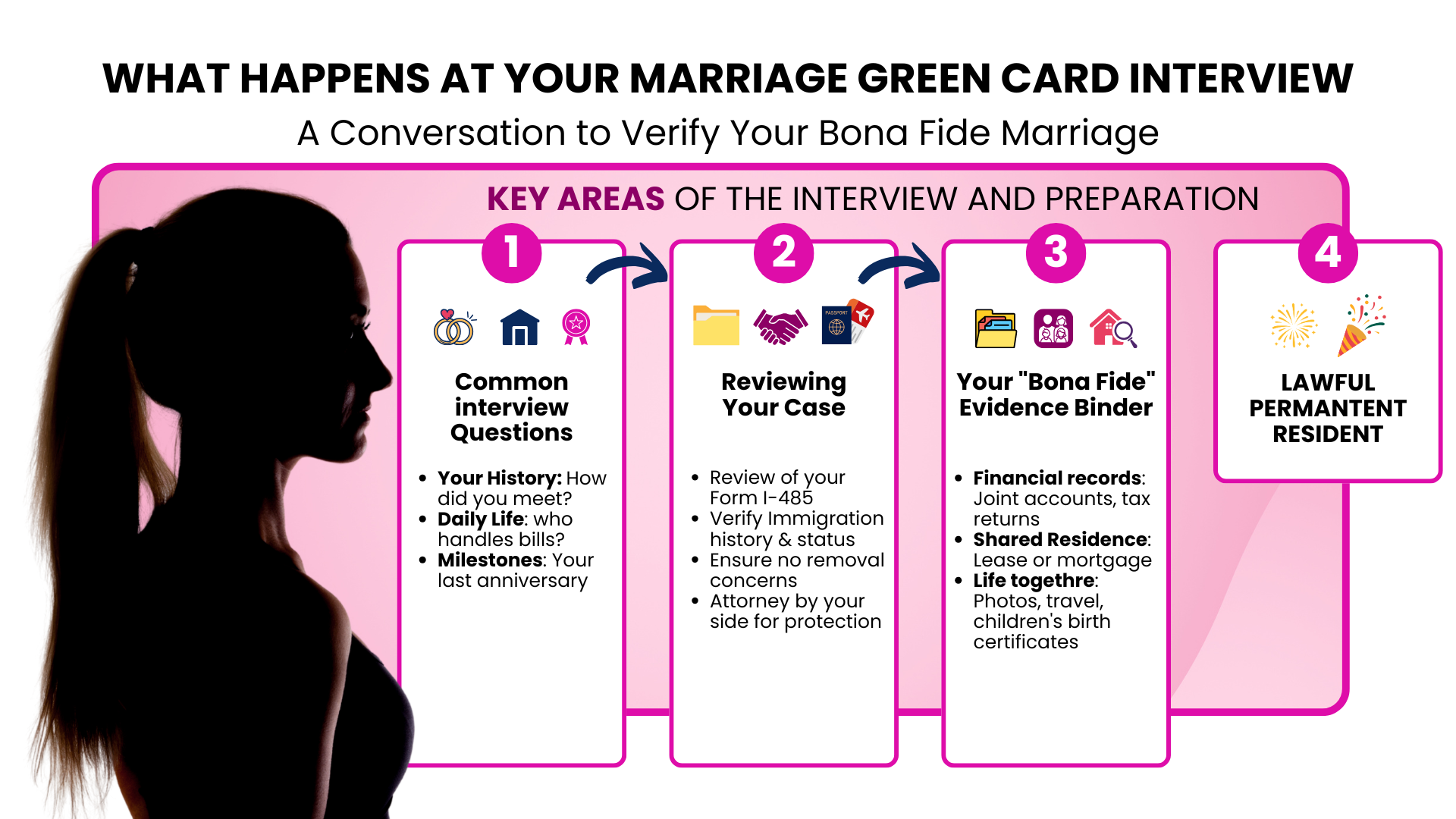
What happens at the marriage green card interview?
It is very normal to feel nervous when you get that interview notice in the mail. Usually, about 8 to 14 months after you file, Citizenship and Immigration Services (USCIS) will ask you and your citizen spouse to come to a local office.
Even though it feels like a big test, try to think of it as a talk about your life together. The USCIS officer has one goal: to make sure your marriage is “bona fide”. This is just a fancy way of saying your marriage is real and based on love, not just to get a permit.
What will they ask?
The USCIS officer will ask about the small and big details of your life as a couple. We have helped thousands of families, so we know the most common questions:
Your History: “How and where did you meet?” or “Who proposed to whom?”
Your Daily Life: “Who pays the bills at home?” or “What is your spouse’s morning routine?”
Your Milestones: “What did you do for your last anniversary?” or “Did you have a big wedding?”
1. Checking Your Paperwork
The USCIS officer will also look at your filed Form I-485 to make sure everything is correct. They will ask about your immigration status and your life in your home country. They want to make sure there are no problems that could lead to removal proceedings. This is why having our immigration attorneys with you is so important. We make sure your answers are clear and your rights are protected.
The “Bona Fide” Folder
We don't send you to the office empty-handed. We help you put together a full folder of proof to show the USCIS officer. This usually includes:
Money Proof: Joint bank accounts, tax returns, or insurance policies.
Shared Residence: A house lease or mortgage with both your names.
Life Together: Photos with family members, your travel plans, and birth certificates for your children. .
1. We Are With You Every Step of the Way
You don’t have to do this alone. At Elizabeth Rosario Law, we can sit beside you during the interview. We make sure the USCIS officer treats you with respect. If there are any tricky legal questions, we are there to explain them. Our goal is for you to walk out of that office feeling happy and secure.
Why is my green card taking so long? (Avoiding 2026 Delays)
If you are checking the USCIS website every day with no news, you are not alone. In 2026, the Federal Government is handling a huge pile of over 5 million cases.
Right now, a marriage based green card takes about 8 to 14 months. We can’t make the government work faster, but at Elizabeth Rosario Law, we make sure your file is perfect. This keeps it from getting stuck because of a simple mistake.
Common “Speed Bumps” We Help You Avoid
When an immigration case is slowed down, it is usually because of a letter called a “Request for Evidence” (RFE). This means the USCIS officer thinks you missed something. Every RFE can add 3 to 6 months to your wait! Here is what we watch for:
The Medical Exam (I-693): You must show the government that you are healthy. A special doctor must sign and seal this form. In 2026, we suggest sending this with your filed Form I-485 right at the start. This way, the officer doesn't have to stop your case later to ask for it.
Proof of Money: (The I-864 Affidavit): To help a family member, the citizen spouse must prove they make enough money. But, if you don't make enough, don't worry! We can help you find a "joint sponsor" so your immigration status isn't denied.
The “Incomplete Package” Trap
USCIS is stricter than ever. Missing just one signature, forgetting the correct filing fee, or leaving a single box blank on your Form I-485 can result in your entire package being mailed back to you before it's even started. We review every single page with a “fine-tooth comb” to ensure it’s perfect the first time.
1. The “90-Day” Entry Strategy
If you just arrived from your home country, timing is everything. Filing too soon can make the government think you lied about why you came to the U.S. We look closely at the 90 days after you arrived to find the safest time to send your papers. This protects you from removal proceedings.
Pro Tip: Don't forget that your work permit usually comes much faster—often in 2 to 5 months. You can start your career while the government finishes its review of your green card!
Special Cases: I have a bar—can I apply for a waiver?
If you entered the U.S. without a visa or stayed longer than your permit allowed, you might have heard about the "3-year bar" or "10-year bar." These are penalties that happen if you leave the country after you have built up “unlawful presence”.
It sounds scary, but at Elizabeth Rosario Law, we want you to know: A bar is not always the end of the road. In 2026, we use special “forgiveness” tools called waivers. These help you fix your immigration status so you aren't separated from your family for years.
The Two Main Ways to Get a Second Chance
Depending on your story, we use different forms to ask the government for permission to stay:
The I-601A Waiver: This is for people who are in the U.S. now and only need forgiveness for being here without a visa. The best part is that you apply while you are still in the U.S. Once the government says “yes”, you go to your birth country for a short interview and come back as a resident—usually in just a few weeks.
The I-601 Waiver: This is a broader tool. We use this if you have other “speed bumps” in your immigration case, like certain criminal history or past mistakes on your paperwork.
Proving “Extreme Hardship”
To win a waiver, we don’t just fill out a form; we tell your story. We must show the USCIS officer that your family member (like a U.S. citizen spouse or parent) would suffer “extreme hardship” if you were forced to leave.
1. What does extreme hardship look like in 2026?
Health Needs: A spouse who needs you to take care of them because they are sick.
Money Trouble: A family that would lose their home or not have enough to eat without your job.
Emotional Pain: The deep sadness and trauma your children or spouse would feel if you were gone for a long time.
Safety Fears: Problems in your birth country that make it too dangerous for your family to move there with you.
2. Why You Need an Expert Team?
Waivers are one of the hardest parts of the immigration process. One small mistake can lead to a “no” and could even put you at risk of removal proceedings.
At Elizabeth Rosario Law, we do the heavy lifting. We gather the doctor’s notes, bank papers, and personal letters that prove your family belongs together. We also check the 90 days after any time you arrived in the U.S. to make sure your plan is safe and follows the law.
Why does my green card only last 2 years? (Form i-751)
You finally get that envelope in the mail, you open your new Green Card, and then you see the date. It expires in only two years! Don't worry—this is a very normal part of the immigration process for new couples.
If you have been married to your citizen spouse for less than two years on the day the government approves you, you get what is called a “Conditional Green Card”.
The “Test Period”
Think of these two years as a "test period" for your residency. The government wants to see that your marriage is still going strong before they give you a permanent 10-year card. Your rights are exactly the same as anyone else with a green card: you can work, travel to your birth country, and live your life. You just have one more step to take before the two years are up.
1. How to Get Your 10-Year Card? (Form I-751)
To switch to a permanent card, we must send a new application called Form I-751
The Timing: You must send this paperwork during the 90 days before your two-year card expires. If you miss this window, your immigration status could be in danger, and you could even face removal proceedings.
The Evidence: Just like your first marriage based green card application, we show USCIS that you are building a life together. We send things like your tax papers from the last two years, new photos with family members, and proof of your shared home.
Skip The Interview: In many cases, if we send a perfect file with plenty of proof, the USCIS officer might decide you don't need a second interview. They will simply mail your 10-year card straight to your door!
What if the marriage didn't work out?
Life happens, and sometimes things change. People often call at our officess and ask, “Can I still keep my papers if we get a divorce?”
The answer is yes.
There are ways to keep your green card even if you are divorced or if there was abuse in the marriage. As your (future) immigration attorneys, we help you through these changes to make sure you stay safe and legal.
1. Becoming a U.S. Citizen
Fixing your 10-year card is the last big step before your biggest goal: Citizenship. If you are still married to your U.S. citizen spouse, you can often apply to become a citizen just one year after you get your permanent card.
Expert Tip: Elizabeth Rosario Law keeps track of these dates for our (future) clients so you never have to worry about your card expiring. Check the USCIS website or schedule your free case evaluation with us to stay on track!
Can I petition for my brother or parents?
At Elizabeth Rosario Law, we believe family is everything. While many people talk about spouses, U.S. citizens also have the power to help their parents, brothers, and sisters move here. However, the "wait time" for each person can be very different.
1. Helping Your Parents: The Fast Track
If you are a U.S. citizen and at least 21 years old, your parents are at the front of the line. Just like a citizen spouse, there is no limit on how many parents can get a green card each year.
This means:
No Long Waiting List: Once the government approves your first form (Form I-130), a green card is ready for them.
They Can Stay Here: If your parents are already in the U.S. and entered with a visa, they might be able to send their filed form I-485 at the same time as your petition. This lets them fix their immigration status without having to leave the country.
2. Helping Your Brothers and Sisters: The Long Game
You can sponsor your siblings, but this path takes more time because the Government only allows a certain number of brothers and sisters to get green cards each year.
Because of this, there is a waiting list. This is where your priority date (your place in line) matters. You can check the USCIS website or the monthly "Visa Bulletin" from the Department of State to see when it is your sibling’s turn. Even though it is slow, starting now is the only way to get their spot in line.
3. Can I petition for my adult children?
Yes! U.S. citizens and permanent residents can petition for their children.
Children under 21: This is usually very fast for U.S. citizens.
Adult children (over 21): These take longer. If your adult child gets married, the wait time might change again.
A Plan for Your Whole Family
Every family member has a different journey. As your (future) immigration attorneys, we don’t just fill out forms. We look at when people arrived, their current immigration status, and the 90-day rule to make a plan for your whole family tree.
Pro Tip: Even if the wait for a brother or sister seems long, it is a good idea to start. Having a petition on file with Citizenship and Immigration Services (USCIS) gives your family a base for future legal options if the laws change!
Can I be deported if I have a green card?
A green card is a powerful shield. It gives you the right to live and work in the U.S. for as long as you want. However, it is not "invincible." Many people ask if they can still be forced to leave after they get their residency.
The short answer is: Yes, but only in special cases.
In 2026, USCIS officers still watch for certain rules. If a resident breaks these rules, they could face removal proceedings. Our goal at Elizabeth Rosaro Law is to make sure your legal status is built on a strong base so you can have total peace of mind.
What could put my residency at risk?
There are three main things that can cause trouble with a USCIS officer or other agents:
Criminal Problems: Certain crimes have big consequences for your immigration status. This includes serious crimes, drug problems, or crimes where someone was dishonest or hurt. Even a small “misdemeanor” can cause the government to review your case.
Lying or Wrong Information: If the government finds out you gave the wrong info on your filed Form I-485 or lied during your marriage based green card interview, they can try to take your card away. In 2026, the government is checking these details more than ever.
Leaving for Too Long: If you leave the United States for more than six months at a time, the federal government might think you gave up your life in the U.S., If you need to stay in your birth country for a long time, we can help you get a “Re-entry Permit” to protect your card.
1. The Importance of “Doing It Right”
This is why we focus so much on the details of the immigration process. When we look at your immigration case, we look at your whole history. We make sure every form is correct. We fix any past “speed bumps” with waivers before they become a big problem.
2. Your Rights and and Staying Safe
If the government ever questions your status, remember that as a green card holder, you have rights. You have the right to talk to an immigration judge. You also have the right to have immigration attorneys defend you and show proof to keep your family together.
The best way to make your shield “invincible2 is to work toward Citizenship. Once you are a U.S. citizen, you cannot be deported. We encourage our (future) clients to check the USCIS website or talk to us about becoming a citizen as soon as they are ready (usually after 3 or 5 years).
Next Steps?
Let’s Protect Your Future: The immigration rules in 2026 can be confusing, and we know how much your family means to you. But as you've seen, you don't have to face the Citizenship and Immigration Services (USCIS) maze by yourself.
Whether you are applying for a marriage-based green card, seeking safety through a VAWA self-petition, or trying to bring a family member home, Elizabeth Rosario Law is here to guide you. Our immigration attorneys have helped over 10,000 families navigate the immigration system, with a 98% case approval rate!
1. Why Choose Elizabeth Rosario Law?
We Speak Your Language: Our team is bilingual.
A Plan with Heart: We don’t just fill out a filed Form I-485. We build a legal shield around your future to protect you from removal proceedings.
Experience You Can Trust: From checking the 90-day rule to practicing for your USCIS officer interview, we make sure every detail is perfect.
Are you ready to see if you qualify?
Don't spend another day worrying about the “what ifs”. Whether you are afraid of having to leave the country or just want to know the current filing fee, we are ready to listen to your story.
You can check the USCIS website for general forms, but for a plan that truly works for your family, you need a personalized strategy.
[Schedule Your FREE Evaluation Today]
Call (855) 627-2292 Serving clients in all 50 states with offices in Wyoming, Michigan; and Charlotte, North Carolina.
Disclaimer: This content is for general informational purposes only and does not constitute legal advice. Immigration laws change frequently and the information here may not reflect the most current legal developments. Consult an attorney for advice on your specific situation.
Elizabeth Rosario, Esq.
Immigration Attorney with over 15 years of experience helping families navigate complex immigration matters.
Newsletter
Subscribe to our newsletter for important immigration law updates and resources for your case.
We respect your privacy. You can unsubscribe at any time.